
Key Takeaways
- Wait at least 6 to 12 months after your first BBL to let swelling and fat settle and see true results. This will confirm you are fully recovered before considering a second procedure.
- Outline specific volume and shape objectives and confirm enough donor fat and healthy donor site tissue to achieve those goals in a revision.
- Anticipate higher risks and more complicated recovery with your second bbl because of the scar tissue, decreased donor fat, and possible fat necrosis. Balance benefits with potential complications.
- Schedule in-depth consultations with a skilled revision surgeon, bring previous notes and photos, and settle on a customized grafting approach and surgical strategy.
- Keep your weight stable for 3-6 months, be healthy and lifestyle conscious, and prepare yourself mentally for another recovery period to guard those long-term results.
- Think non-surgical and fitness or skin-tightening options as enhancements or alternatives to additional surgery when possible.
Second round BBL timing refers to the typical schedule and recovery window for a follow-up Brazilian Butt Lift procedure. Most surgeons schedule a second session six to twelve months after the initial one to allow fat to stabilize and the body to completely heal.
This timing is all based on scar status, patient goals, and donor fat availability. Good communication with a board-certified surgeon goes a long way in setting realistic expectations and a safe plan for repeat fat grafting.
Revision Rationale
Revision of a Brazilian butt lift (BBL) starts with a clear understanding of why the initial outcome is lacking. Typical causes are apparent volume loss, occasionally as high as 50% in the post-operative period, irregular contour, scarring, infection, poor wound healing, or failure of expectations.
Analyze the original surgical plan versus the existing anatomy, weight variations since surgery, and how the fat redistributed. Delay revision until at least 6 to 12 months. This allows swelling to subside and fat survival to clarify.
Volume Goals
Have quantifiable goals about how much extra projection or fullness you desire. Contrast present butt volume to the optimum using pre and post-first BBL photos and objective measurements where feasible.
See if donor sites still have sufficient fat for another transfer. Repeat liposuction can harvest abdomen, flanks, or thighs but depends on body habitus and any previous liposuction. If donor fat is limited, talk about staged transfers or other implants.
- Add 10–20% more projection to restore original plan.
- Make up lost volume equal to thirty to fifty percent of what was transferred last.
- Target localized upper-pole fullness to correct sagging.
- Aim for bilateral symmetry within 1–2 cm difference.
Compare initial expectations to current goals to plan how aggressive secondary transfer must be. Go into actual survival rates for transferred fat and if multiple sessions are okay to attain final volume.
Shape Correction
Correct asymmetry, dents or lumps with focused liposuction and fat grafting. Employ small layered grafts to even out irregularities and prevent large boluses that can succumb to necrosis or lumpiness.
Determine if gentle contouring or bold reshaping is necessary given body type and previous results. Diminish saddlebags, lateral thighs, and waist for better proportional balance and gluteal pop.
Treat contour irregularities before volumizing. Fix scar tissue or tethering that limits fat distribution. Advanced maneuvers like fat compartment mapping and micro-droplet grafting enhance predictability and symmetry.
Natural Changes
Factor in aging, weight gain or loss, and skin elasticity since your first BBL. Track fat cells that settled in buttocks and donor sites over months or years.
Some patients deflate or lose projection that leads to revision. Weight swings can expand or contract transplanted fat and adjacent tissue, affecting the outcome.
- Noted loss of projection after six months.
- Weight gain of 5–10 kg changed contour.
- Skin laxity around lower buttocks increased sagging.
- Donor site fat diminished after aggressive dieting.
Schedule revisions around these anatomic changes, considering realistic timing, donor availability and the potential for staged procedures.
Optimal Timing
A distinct timing awareness counts when scheduling a second round BBL. Healing, outcome definitiveness, donor-site access, weight plateauing and mindset all dictate when a second surgery should happen. Here are targeted considerations to give you decision-making guidance, supported by common surgical directives and handy checks you can pose to your surgeon.
1. Full Recovery
Make sure you’re back to your normal day-to-day activities and full pain-free exercising without abnormal restrictions before planning a second BBL. Any external bruising should have resolved and swelling should not cause tightness or deformation.
Track progress in a recovery log: note dates when you resumed light, then moderate, then full activity. Record any persistent numbness or soreness. Employ a readiness checklist including skin elasticity, scar condition, range of motion, and no signs of infection.
Bring this log to share with your surgeon so they can make decisions based on a documented recovery, not memory.
2. Result Stabilization
Wait until the results from the initial BBL have plateaued, which is generally a few months after surgery. Surgeons generally suggest a 6 to 12 month window to allow swelling to subside and fat retention to plateau.
See if buttocks volume has plateaued and fat graft survival seems uniform at follow-ups. Be on the lookout for late changes like localized fat loss, contour irregularities, or unexpected shifts in shape. These can alter revision timing.
Schedule follow-ups at 3, 6, and 12 months to see when they stabilize and when results are reliably clear.
3. Weight Consistency
Maintain your weight for at least three to six months prior to your second procedure. Weight shifts alter fat distribution and can result in uneven or unexpected results following further fat transfer.
Log weight weekly and bring trends to your appointment. Focus on the nutrition and exercise plan you can sustain. Surgeons like operating when weight is stable because it results in more reliable graft take and contour outcomes.
4. Donor Area Health
Examine donor sites, abdomen, back, thighs, for sufficient fat and for problems like deep scarring from previous liposuction. Scarred or fibrotic tissue can complicate harvesting and compromise graft quality.
If main sites have been tapped, talk to your surgeon about different donor areas or a staged liposuction approach. Take a rough table of possible donor areas, fat volume, scars, skin quality, and so on, to arrive at a realistic plan for your next harvest.
5. Mental Preparedness
Test your mettle and aim for a second surgery. Reflect on the first experience: recovery demands, pain levels, and whether expectations were met.
Make sure you are prepared to go through the healing period and lifestyle restrictions all over again. Jot down what changes you want and go over them with your surgeon to get on the same page regarding expectations and timing.
Elevated Risks
Revision BBLs have higher complication rates than a primary procedure. Scar tissue, decreased vascularity, and distorted anatomy increase the risk of fat necrosis, infection, and compromised graft survival. A second procedure is possible, but it is more complicated, and timing matters. Allowing at least six months for healing lowers some risks, while returning sooner often increases them.
Deciding to go ahead should balance the probable rewards of better form or symmetry against these increased risks and the possibility of additional surgeries.
Scar Tissue
Old scar tissue from the first BBL renders liposuction and fat transfer more difficult. Scar bands have the ability to trap fat, lead to uneven fat distribution, and restrict the uniform distribution of fat beneath the skin. More lumpiness or deep scarring can occur after revision surgery, and patients should anticipate an increased risk of palpable nodules or visible contours.
Surgeons typically employ niche techniques, such as sharp scar release, layered fat deposition, or small cannulas, to decrease new scar formation and the risk of tethering in the glutes. It is paramount to record with photos and notes where previous scars lie and how extensive they are, as this can drastically alter the operative map.
Fat Harvesting
There’s no guarantee they’ll be able to harvest enough good quality fat the second time around. Donor areas can be exhausted by previous liposuction or exhibit fibrotic change, which decreases yield and cell viability. The first liposuction technique – power-assisted or manual, aggressive or conservative – determines how much usable ‘virgin’ fat remains.
Ultrasound guidance or futuristic body-contouring tools can assist in identifying pockets of useful fat and enhance removal accuracy. Donor-site options carry trade-offs: the abdomen offers volume but may be scarred, the thighs can give good texture but may thin the leg, and the flanks are often reliable but limited. Each of these sites has advantages and disadvantages in terms of volume, quality, and impact on the overall contour.
Asymmetry
Persistent or new asymmetry is a reason for a second BBL. Although focused fat grafting can fill the voids and enhance buttock projection, achieving perfect symmetry is challenging once the tissues shift and scar. As with the other areas, marginal, staged shifts in hips, waist, or thighs may be required to even out the figure.
Occasionally, contour alteration in surrounding zones yields the optimal aesthetic outcome. Many surgeons map out asymmetric zones—upper pole, lower pole, lateral fullness, medial cleft, for example—to assist graft placement and prevent overcorrection. Tracking results over a few months allows you to determine if additional minor adjustments are needed.
Skin Quality
Skin elasticity and tone will determine the maximum benefit another fat transfer can provide. Bad skin, thin, stretched, or with numerous striae decreases graft take and can sag after volume alteration. If skin won’t hold up extra volume, skin-tightening treatments, energy-based treatments, or small lifts may be necessary in conjunction with grafting.
Document foreshadowing depressions and attenuated skin prior to surgery to establish attainable expectations and select adjunctive treatments. Empowered patients balance these risks against outcomes.
Surgical Nuances
2nd round BBL timing depends on surgical preparedness, tissue reaction, and meticulous scheduling. A quick review of previous results, scar disposition, and fat persistence determines if and when a revision is in order.
Surgeons usually recommend a 6 to 12 month waiting period following the initial BBL to let fat graft settling and skin remodeling take place. This timeframe helps determine if additional volume is required or if simple contour tweaks will do.
Advanced Consultation
Book a comprehensive consult to evaluate your past surgeries, healed flaps and present body contours. Bring photos, operating notes and any imaging. These expedite decisions and minimize guesswork.
Request a detailed procedural outline of the proposed method, anesthesia strategy, and an honest recovery timetable accounting for prior healing. Nail down your objectives, such as more projection, improved symmetry, or a polished hip-to-waist ratio, and verify the surgeon’s success rate with such tweaks.
Ask about complication rates and management because revision BBL has a greater risk of requiring even more correction compared to a one-and-done treatment.
Refined Techniques
Learn modern fat grafting and liposculpting techniques that minimize downtime and maximize predictability. Inquire about ultrasound-guided injections, small cannulas, and layered grafting techniques that seek to optimize graft take while safeguarding deep structures.
Contrast these selections with more ancient methods so you know compromises in recuperation and visual result. Surgical nuances tend to produce a more organic flow between your cheeks and surrounding regions and can take advantage of better skin compliance after your first BBL.
Ask for examples or case photos demonstrating staged enhancement and how much extra contouring they were able to accomplish.
Grafting Strategy
Individualize your grafting strategy to your unique anatomy and history of results. Surgical nuances identify your desired volume and where fat should be supplemented for symmetry.
Hips, lower back, and outer thighs often need particularly targeted work to unify the shape. Considerations of donor sites and safe fat harvesting quantities per session should be prioritized.
Multiple small harvests can minimize donor-site contour deformities. Plan the fat transfer process, from harvest and processing to injection areas and layering technique.
Appreciate that a second round can continue to boost size and shape, but increases risk for problems such as asymmetry or skin breakdown, so a cautious, staged approach often works best. Health after the first surgery matters. Full recovery and stable weight improve graft survival and lower complication risk.
Recovery Revisited
Recovery second round BBL – recovery after a second round BBL is often similar to the first but can be longer and require more care. Anticipate a few weeks of restriction, the first two being the most limited. Pain and soreness are generally mild to moderate, with bruising and swelling typical.
These symptoms tend to subside over a period of weeks, rather than days. Patients often experience swelling or tenderness along previous scar lines and for those who have had an initial BBL, scars are more prone to be sensitive or bleed during revision surgery. Expect to be out of commission for at least six weeks, with many surgeons recommending a return to normal activity as late as six to twelve weeks post-op, depending on the healing process.
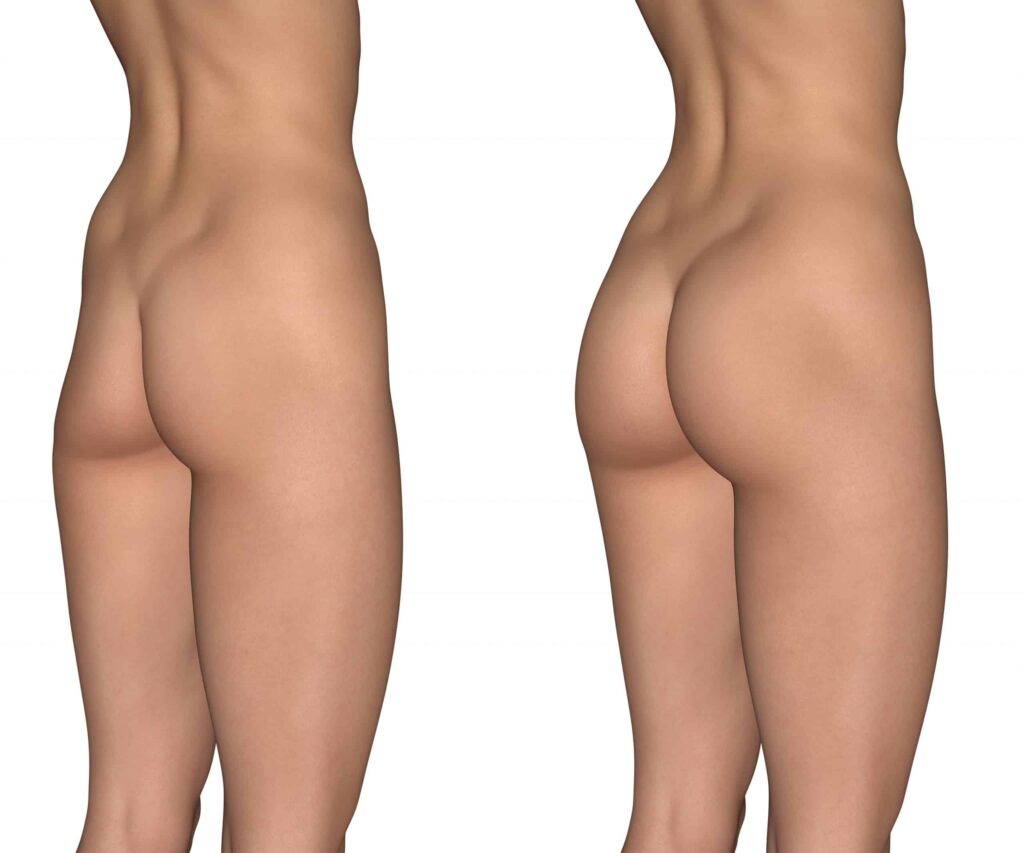
Adhere to your surgeon’s operating instructions for recovery. Wear the compression garments as prescribed to manage swelling and assist the tissues in settling. Compression aids in contouring and can enhance comfort while sitting or transitioning.
Wound care is critical: keep incision sites clean, change dressings per instructions, and watch for signs of infection such as increasing redness, heat, or pus. Steer clear of cigarettes both prior to and post revision. Smoking compromises blood flow and fat graft survival. Most surgeons make patients smoke-free and well recovered from the initial surgery before a revision.
Observe for revision-specific complications. Revision work can have scar tissue and changed anatomy, which increases the risk of additional bleeding at scarring sites and inconsistent fat take. The revision fat survival rate is usually about 60 to 80 percent and it takes more than eight weeks for fat to settle and demonstrate a final volume.
Remember, some patients lose 35 to 40 percent of buttock size six months following the initial BBL. This is a common revision cause and helps ground expectations for what a second procedure can accomplish.
Record your healing with a daily log to help identify trends and report back succinctly to your surgeon. Track pain, swelling, wound appearance, garment use, and any decreased mobility. Photograph the region under the same light and angle every few days to track contour changes and fat take.
Remember your sleep position and sitting time, as pressure impacts graft survival. If you notice persistent fever, intense pain, increasing drainage, or sudden asymmetry, call your care team right away.
Plan timing carefully: most surgeons recommend waiting six months to a year after the initial BBL to allow fat grafting to stabilize and to judge whether revision is needed. Follow-up visits need to be frequent in the initial two months and may continue as recommended until healing is secure.
Beyond Surgery
Second-round BBL timing is just one element in a recovery and maintenance timeline. Surgical limits matter: a BBL can add volume and reshape the buttocks, but it cannot create unlimited tissue or fully compensate for major weight changes. Certain patients require more than one go to achieve objectives as fat availability, prior graft survival, and skin laxity impose physical restraints.
Most surgeons suggest waiting 6 to 12 months, and many recommend at least 9 to 12 months after the first surgery before a second surgery. That pause gives grafted fat a chance to settle, allows you to recover physically, and provides space to evaluate whether you’re happy with the results.
Non-Invasive Options
Non-invasive methods can contour without surgery. Radiofrequency and ultrasound devices warm tissue to firm skin and stimulate collagen, which is great when there’s copious volume but just not enough tautness. Injectable fillers can provide localized contouring but are temporary and run the risk of migration or reactions.
Benefits include lower downtime, lower immediate risk, and repeatability. Limitations include less dramatic change, cost over time, and modest longevity compared with fat grafting.
| Method | Benefit | Limitation |
|---|---|---|
| Radiofrequency | Skin tightening, improves texture | Multiple sessions; modest lift |
| Ultrasound | Deep tissue tightening | Variable results; needs time to show |
| Injectable fillers | Precise contouring | Temporary; risk of migration |
| Cryolipolysis (adjacent areas) | Reduce nearby fat to enhance curve | Not direct augmentation; uneven loss risk |
Pairing non-invasive with surgical work can extend results. For instance, skin-tightening radiofrequency at three to six months post-BBL can complement grafted volume. Talk sequencing with your surgeon.
Fitness Impact
Even though exercise is great for holding the shape, timing is everything. Strength training for glutes maintains butt projection and overall balance. Early recovery needs low impact movement, no running, heavy squats, or direct pressure for weeks to months depending on surgeon guidance.
A custom plan begins with soft walking and mobility and progresses to bands and then weights after clearance. Trace your progress with monthly measurements and photos to visualize how fitness redefines contour and volume.
WARNING: Cardiovascular exercise during the first few months will deplete fat stores and skew your results.
Lifestyle Adjustments
Diet and weight stability is paramount to fat retention after a second BBL. Keep consistent calories so you don’t have giant weight swings that can alter graft survival. Staying hydrated and getting plenty of sleep accelerates healing, and don’t smoke.
Smoking constricts blood flow and inhibits graft take. While you’re recovering, avoid long sits on the newly grafted region and use those approved cushions and positioning tips.
Checklist: stable weight for 3 to 6 months, no smoking for several weeks pre- and post-op, hydration goals met, regular sleep schedule, and planned gradual return to exercise.
Conclusion
A second-round BBL suits a number of patients who desire additional shape, additional balance or repairs from the initial surgery. Timing is important. Wait at least 12 months after the first BBL so scar tissue softens and fat grafts settle. Discuss your objectives with a board-certified plastic surgeon familiar with BBL details and patient safety guidelines. Look forward to an extended consult, refined imaging, and a well-defined plan for donor sites and graft volume. Anticipate the increased risk and plan your recovery with support, rest and stepwise activity. As a more specific next step, pull together your records, jot down what you want to change, and schedule a consultation with a reputable surgeon. That helps establish realistic expectations and a real way forward.
Frequently Asked Questions
When is the best time to consider a second round BBL (Brazilian Butt Lift)?
WAIT 6–12 MONTHS POST 1ST BBL. This gives swelling a chance to dissipate and fat grafts a chance to take hold. Once a qualified surgeon confirms tissue readiness and volume retention, revision surgery can be planned.
How do I know if I need a second BBL?
You might require a second BBL if you experience visible volume loss, asymmetry, scarring, or contour abnormalities after 6 to 12 months. A surgeon evaluation and photos over time assist in deciding if revision will enhance outcomes.
Are risks higher with a second BBL compared to the first?
Yes. Revision BBLs pose higher risks from scar tissue, reduced donor fat availability, and distorted anatomy. Selecting a skilled, board-certified plastic surgeon minimizes complications and enhances results.
How much donor fat is typically needed for a revision BBL?
Donor fat requirements are different for each person and for the intended change. Frequently, less fat survives in revisions, so surgeons think conservatively and sometimes graft in layers or stage the procedures. Pre op gives a more accurate estimate.
What surgical techniques change in a second BBL?
Surgeons tend to utilize advanced placement, micro-droplet grafting and scar management. They don’t do re-injection into deep muscle and they stage procedures. Method shifts to maintain safety and maximize graft survival.
How long is recovery after a second BBL?
Expect a similar recovery timeline: 2 to 4 weeks for basic activity and 3 to 6 months for most contour settling. Swelling can last longer on revisions. Adhere to surgeon guidelines on sitting, compression, and activity for optimal outcomes.
Can non-surgical treatments help instead of a second BBL?
Small contour irregularities can sometimes be addressed with fat graft touch-ups, fillers in select instances, or skin therapies. Major volume or shape adjustments generally necessitate surgical revision for dependable, long-term results.